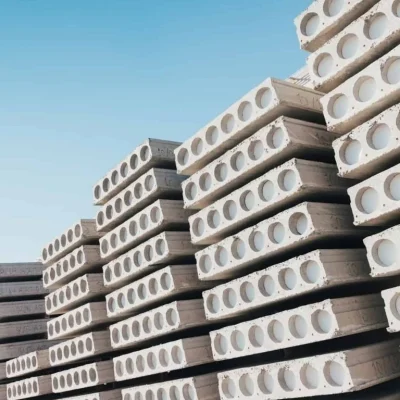

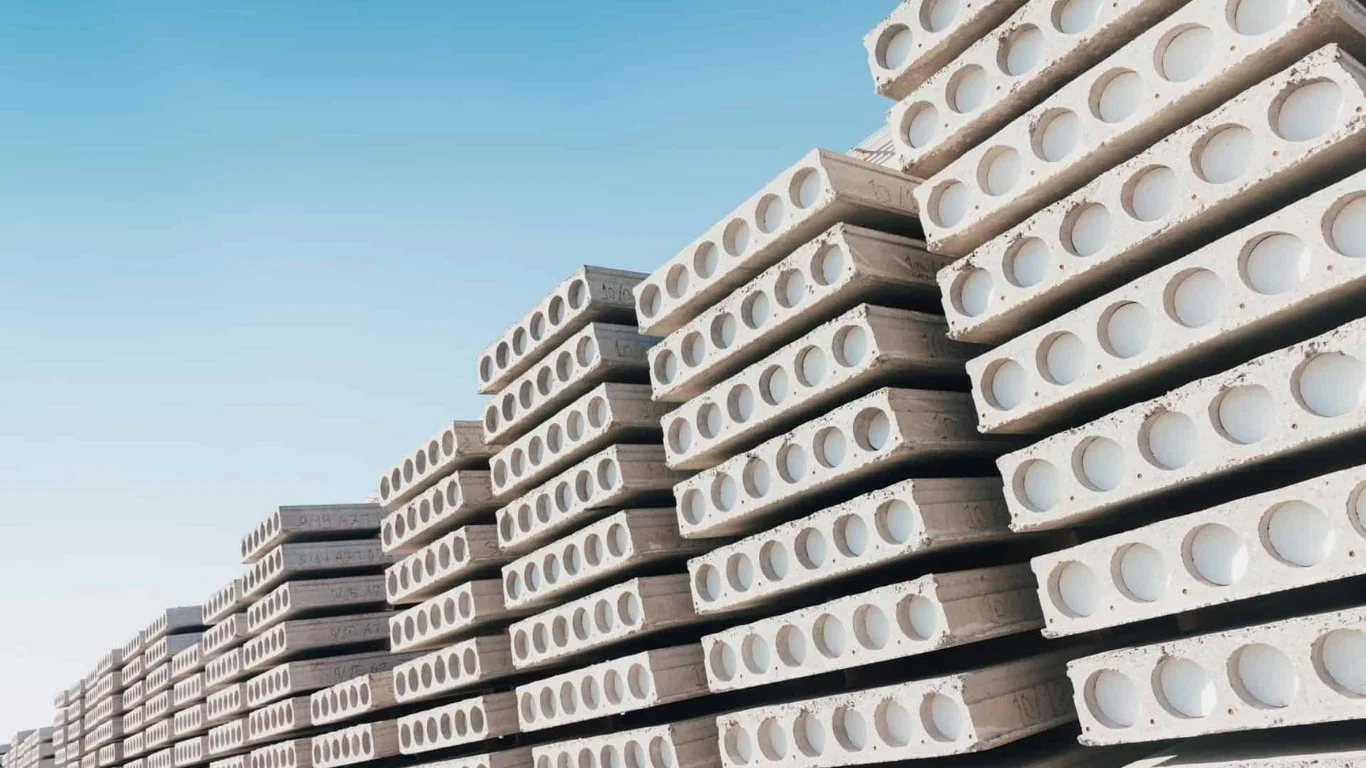
An earth retaining wall holds back soil at a change in ground level. For industrial and infrastructure projects, precast L-shaped retaining walls are engineered against project-specific soil, load and drainage conditions — not a single standard dimension.
Industrial plots and infrastructure corridors often include a change in ground level — a platform cut into a slope, an embankment beside a road, or a level difference between adjacent plots. An earth retaining wall is the structure that makes that level change safe to build and work around.
What the wall actually has to resist
A retaining wall’s design has to account for several things at once: the weight of the retained soil, the soil’s angle of internal friction, any surcharge or overburden load on top of the retained ground, and the ground’s own bearing strength beneath the wall’s foundation. Two standard checks that typically govern the design are a sliding safety factor and an eccentricity limit for overturning.
Why drainage detailing matters
Water pressure building up behind a retaining wall is one of the most common causes of retaining-wall distress. That’s why drainage holes through the wall stem, paired with a soil-particle stop filter, are part of standard detailing on 3Bro Precast’s earth retaining wall — relieving hydrostatic pressure while limiting fines migrating into the drainage path.
Why precast, for this application
Precasting an L-shaped retaining wall shifts the curing period off the project’s critical path compared to shuttering and pouring the wall in place — useful on industrial and infrastructure programmes where the retaining structure often has to be in place before other site work can proceed.
The one thing every project should hear
Final retaining wall configuration depends on soil conditions, surcharge loads, drainage, foundation and engineering design — dimensions referenced on product pages are starting points, not a specification that applies uniformly to every site. See the Earth Retaining Wall product page for full technical detail.