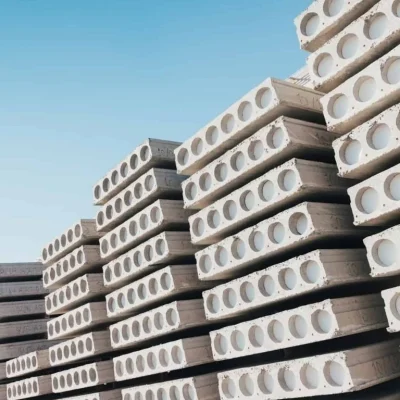

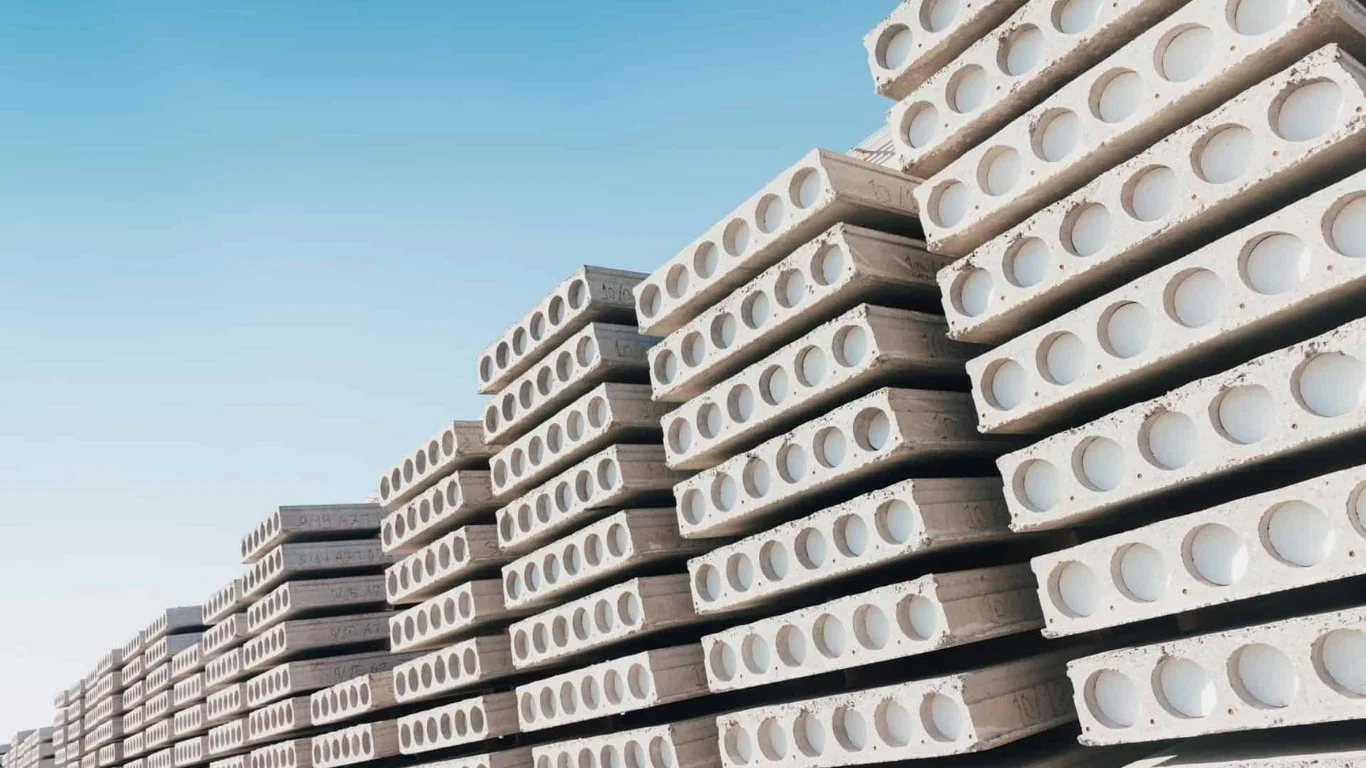
Precast concrete reduces construction time mainly by moving curing and quality-control work off-site and ahead of the installation date — so on-site work shifts from a construction sequence to a shorter installation sequence, most clearly for compound walls, drainage and retaining structures.
“Precast saves time” is a common claim — worth unpacking into where the time actually comes from, and where it doesn’t.
Where the time saving is real
- Curing happens off the critical path. Concrete needs time to cure regardless of method; precasting lets that curing period run in parallel with other site work, rather than blocking the boundary or drainage trade on site.
- Installation replaces multi-trade sequencing. A precast compound wall install (post erection, panel placement, jointing) is a shorter, more predictable sequence than excavation, masonry, plastering and curing carried out trade-by-trade on site.
- Weather has less impact. Once elements are cast and cured, on-site placement is far less sensitive to weather than wet trades like masonry and plastering.
Where precast doesn’t automatically save time
- Custom or first-of-type elements still need drawing review, mould preparation and casting lead time before delivery — plan this into the programme rather than assuming stock availability.
- Site access and lifting for precast elements needs planning; a site without crane or lifting access may see less benefit than one that has it.
- Foundation work for posts, retaining wall bases or drain bedding still has to happen on site, on its own timeline.
How to plan a project around precast lead times
Share your target delivery date early — production is scheduled against mould availability and your stated timeline (see the Manufacturing Process page). For custom precast work, share drawings as early as possible so technical review doesn’t become the bottleneck.